
The scribble study method is one of the most popular study hacks on TikTok right now. But is there real science backing it, or is it just another viral trend that looks good on camera? The answer is somewhere in between.
What Is the Scribble Study Method?
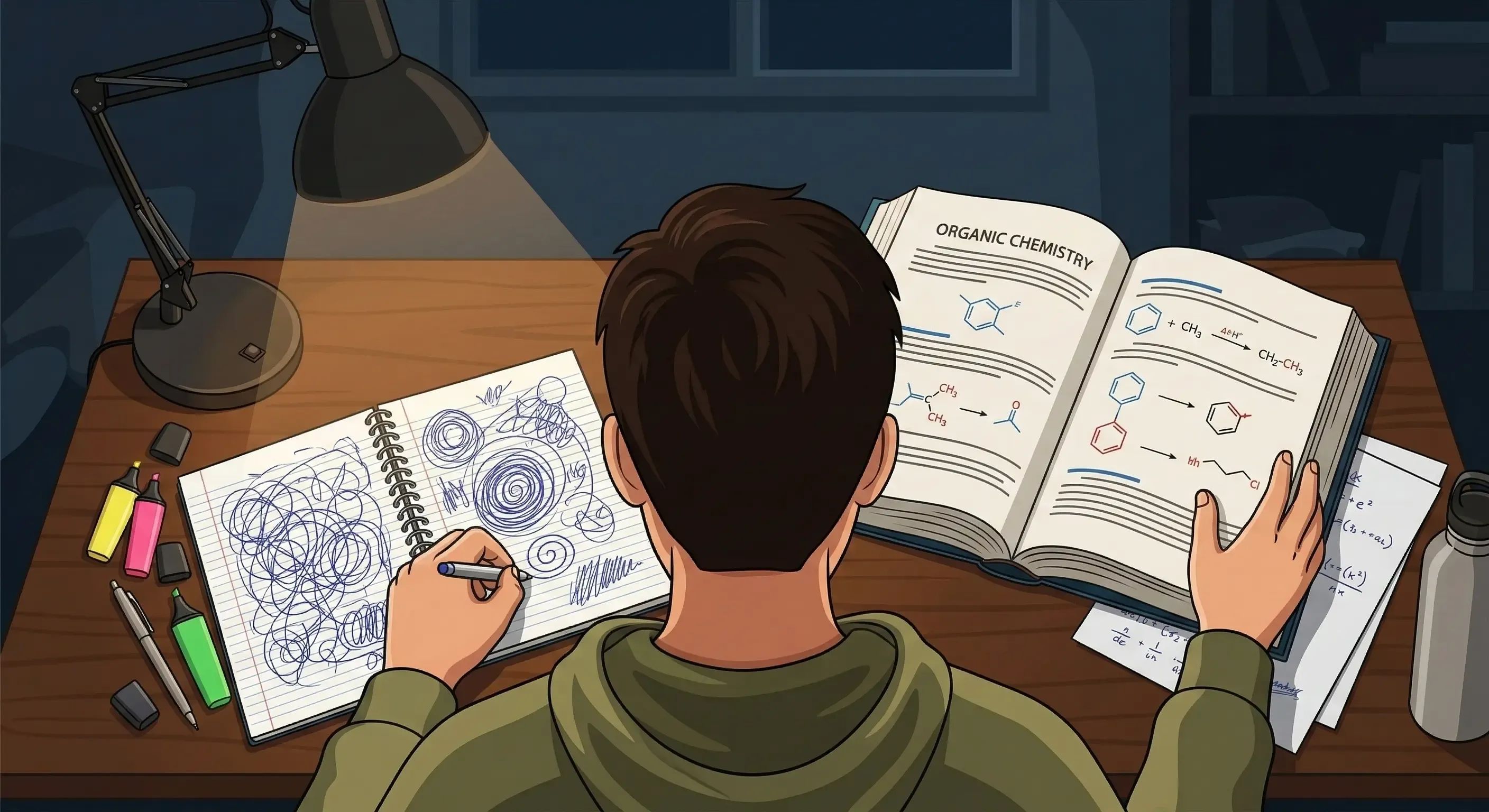
The scribble study method is a focus technique where you doodle aimlessly (circles, squiggles, whatever) while reading or listening to study material. The scribbles are random and meaningless on purpose. They are meant to keep your hands busy so your brain stays focused.
It's purely a focus technique, not a note-taking method. That's the part most people get wrong.
The theory is that when you're reading a dense textbook or sitting through a long lecture, your brain looks for an outlet or distraction. It drifts to your phone, your to-do list, what you're eating later. Scribbling gives your brain just enough stimulation to stay in the room without pulling attention away from what you're studying.
A popular variant is scribbling with your non-dominant hand. The extra coordination required to write with your weaker hand occupies a bit more mental bandwidth, which some students say keeps them even more locked in. There's no formal research on the non-dominant hand version specifically, but the logic tracks with what we know about divided attention and low-demand secondary tasks.
Don't confuse this with the blurting method, where you close your book and write everything you remember. Scribbling works the other way around: you keep your hands moving so your brain can focus on taking information in.
The method got popular on TikTok because it's dead simple, looks kind of satisfying on camera, and several creators swore it helped them ace their exams. Here's a few popular videos from this trend:
What the Research Actually Says
Our research found the following stat repeated everywhere: "doodling improves recall by 29%." That number comes from a 2009 study by psychologist Jackie Andrade at the University of Plymouth, published in Applied Cognitive Psychology.
In the study, 40 participants listened to a boring 2.5 minute phone message. Half were told to shade in shapes while listening. The doodlers recalled an average of 7.5 names and places versus 5.8 for the control group. Andrade's theory: doodling prevented daydreaming, which kept participants engaged enough to absorb more.
This is the closest scientific analog to the scribble study method. The setup is almost identical: do something mindless with your hands while your brain processes information.
But newer research complicates things. A 2024 study by Spencer-Mueller and Fenske at the University of Guelph tested 222 participants across two experiments using actual lecture content (not a phone message). Their finding: doodling did not reduce boredom or mind-wandering, and it did not improve attention or retention. Plain note-taking beat doodling on every measure.
So what's the honest takeaway?
Scribbling might help during low-engagement tasks where daydreaming is the main threat (boring audio, simple reading). For more complex material that requires deep focus, the evidence is weaker. And the 2024 study suggests that if you're going to do something with your hands, actually taking notes is more effective than aimless doodling.
The scribble method is a focus hack with some scientific backing. Whether it works for you likely depends on what you're studying and how easily you zone out.
How to Use the Scribble Study Method
Grab a pen and a separate sheet of scratch paper (not your actual notes). Open your textbook, start the lecture, or pull up your slides. Then let your hand move while you read.
Draw circles, shade boxes, make random lines, fill in patterns. Don't think about what you're drawing. The moment you start trying to make your scribbles look like something, you're pulling attention from the material.
That's it. The whole method. A few things that help:
- Use unlined paper so there's no temptation to write neatly
- Keep your scribbles on a separate sheet from your real notes
- If you zone out, refocus on the content and keep scribbling. The goal is to reduce how often you drift, not eliminate it
The one thing most TikTok guides skip: after your scribble-and-read session, close your materials and test yourself. Use flashcards or practice questions to check what actually stuck. More on why this matters below.
Why Scribbling Alone Isn't Enough
The scribble method helps you stay engaged while reading, but reading with focus is still passive learning. You can read every word without zoning out and still bomb the test because you never practiced pulling that information back out of your brain.
This is backed by decades of research. A landmark study by Roediger and Karpicke published in Psychological Science found that students who tested themselves after reading retained far more than students who simply re-read the material, even when the re-readers spent more total time studying. The researchers called this the "testing effect," and it's one of the most replicated findings in cognitive psychology.
Scribbling helps you absorb. Active recall helps you retain. You need both.
The best approach: use scribbling during your reading sessions, then follow up with practice questions. If you're studying from a textbook, lecture slides, or notes, an AI quiz generator makes it easy. Upload your source material and you'll get questions that test you on exactly what you just read.
One thing to note: if your material requires active problem-solving like math, chemistry equations, or code, practicing is your study method. Scribbling is for intake-heavy subjects where you need to stay locked in while reading or listening.
FAQ
Does the scribble study method help with ADHD?
Many students with ADHD say it helps. The method gives your hands something to do, which can reduce fidgeting and restlessness. It's not a substitute for other ADHD strategies, but it's an easy addition to try.
Can I combine scribbling with mind mapping or visual notes?
They serve different purposes. Use scribbling during passive intake (reading, lectures) to stay focused. Use mind mapping when you're actively organizing concepts after studying. You may scribble during a first read-through, then create structured visual notes on a second pass.
How long should I scribble for?
As long as your reading session lasts. The scribbling matches the length of whatever you're studying. If you're reading for 45 minutes, you scribble for 45 minutes. There's no separate "scribble time" to schedule.
Make the Scribble Method Count
The scribble study method keeps you in the chair. Pair it with practice questions, and you'll actually remember what you read. Try Studygenie free to turn your study material into practice quizzes and find out what stuck after your next scribble session.